 Ultimate guide
How to Host a Wedding in 2026: The Complete Guide
Last Updated: November 19, 2026
Quick Summary
To host a wedding in 2026, start by building a line-by-line budget before you book anything, using the national averages of $34,200 (The Knot) or $36,000 (Zola) only as benchmarks. Then book your venue and caterer first, since they lock the date and your two largest line items, and let every other vendor flex around them.
- A common 2026 split sends roughly 29% of the budget to the venue and 24% to catering and drinks.
- Twelve months out is the standard planning runway, but you can compress the front end if you are flexible on date.
- Send save-the-dates eight to ten months out and invitations six to eight months ahead.
- Book vendors in this order: venue, caterer, photographer, entertainment, florist, then rentals.
- Requests for January and April weddings grew 1,210% year over year, according to Roomblocks' 2026 report.
Table of Contents
- Start With the 2026 Wedding Budget Breakdown
- What to Look for in Wedding Venues Before You Sign
- Your Wedding Planning Timeline 2026, Month by Month
- 2026 Wedding Trends Worth Building Into Your Day
- Guest Count, Invitations, and RSVP Management
- Vendor Booking Order and Contract Review
- Weather Contingencies, Accessibility, and Day-of Logistics
- Tour a Historic Hall and Lock In Your 2026 Date
- Frequently Asked Questions
Start With the 2026 Wedding Budget Breakdown
Learning how to host a wedding in in 2026 starts with one number, and the surveys don't agree on it. The Knot's 2026 Real Weddings Study puts the average wedding cost at $34,200 across 10,474 couples, while Zola's First Look Report reports $36,000 from more than 11,500 couples. Treat both figures as a starting benchmark, not a spending target.
A wedding budget breakdown is the line-by-line allocation of your total spend across venue, catering, photography, attire, and guest-related costs before you book anything. Couples who build it first negotiate better and panic less.
What the National Averages Actually Tell You
The gap between $34,200 and $36,000 matters less than what it hides. National averages blend a 40-guest backyard reception with a 200-guest ballroom, so neither figure describes your wedding. Use them to sanity-check quotes, then build your own number from guest count and venue type.
For a closer read on what historic spaces actually run, our guide to the average cost of historic wedding venues breaks down 2026 pricing.
Allocating Your Budget Room by Room
A common 2026 split sends roughly 29% to the venue and 24% to catering and drinks, according to Meet Neptune's 2026 budget breakdown. That leaves about 47% for photography, attire, flowers, music, and rentals.
Before you divide a dollar, understand what drives venue quotes in the first place. Our explainer on wedding venue pricing factors covers the variables that move your number most.
| Budget Line | Typical Share | What It Covers |
|---|---|---|
| Venue | ~29% | Rental fee, ceremony space, staffing |
| Catering and drinks | ~24% | Dinner, bar service, cake |
| Photography and video | 10-12% | Coverage hours, editing, album |
| Attire and beauty | 8-10% | Dress, suit, alterations, hair |
| Flowers and decor | 8-10% | Centerpieces, bouquets, installations |
| Music and entertainment | 6-8% | DJ or band, ceremony musicians |
| Rentals and extras | 5-7% | Linens, tableware, lighting, tent |
Typical Share
What to Look for in Wedding Venues Before You Sign
The right venue answers three questions before you ask: does the space fit your guest count comfortably, is the layout workable for ceremony and reception, and does the contract match what the tour promised? Everything else is decoration.

Start with capacity. A hall that seats 150 with a dance floor is not the same as one that seats 150 only if nobody dances. Ask for the seated capacity with tables and a dance floor, not the standing reception maximum.
Our 2026 venue selection guide expands this into a full checklist of features and red flags.
How Season, Day, and Guest Count Move the Price
A national average tells you almost nothing about your quote because venue pricing varies more by date and guest count than by anything else. A Saturday in peak season (typically late spring through early fall) commands the highest fee; a Friday, Sunday, or off-season date often runs meaningfully less for the same room.
Before you compare two venues, normalize the quotes: same date type, same guest count, same inclusions. A lower base fee with a higher per-guest catering minimum can cost more than a higher fee with flexible catering. Run both totals side by side rather than comparing headline numbers.
Questions That Reveal Hidden Costs
Ask what the rental fee excludes. Setup and cleanup, tableware, linens, security, overtime, and required vendor lists are where quotes quietly grow. Get every answer in writing with the dollar amount attached.
Watch out: a low base rental with a mandatory in-house caterer can cost more than a higher fee that lets you bring your own. Run both totals before comparing.
Contract Checkpoints Before You Sign
Read the contract for five things: the deposit amount and whether it is refundable, the cancellation and postponement policy, overtime rates, the final payment date, and the certificate of insurance requirement. Confirm in writing who is responsible for setup and cleanup, what time load-in and load-out begin, and whether the venue requires a specific vendor list. Ask the venue to list what it provides and what it expects you to bring, then compare that list against every other quote.
For the clauses that hide these numbers, read hidden costs in wedding venue contracts.
Your Wedding Planning Timeline 2026, Month by Month
Twelve months out is the standard runway, and it works because vendors book in sequence, venue and catering lock the date and the two largest line items, and everything else flexes around them. The table below is the skeleton; the notes after it explain the decision points that actually trip couples up.
| Timing | Task | Decision to make |
|---|---|---|
| 12 months | Set budget, draft guest list, book venue | Guest count range and venue type |
| 10 months | Book photographer, caterer, and DJ or band | All-inclusive vs. build-your-own vendor team |
| 8 months | Order attire, send save-the-dates, book officiant | Ceremony style and legal requirements |
| 6 months | Send invitations, book florist, plan rentals | Indoor vs. outdoor ceremony and reception |
| 4 months | Finalize menu, tasting, and decor plan | Dietary accommodations and bar package |
| 2 months | Confirm vendor times, build day-of schedule | Run-of-show and rain plan |
| 1 month | Final headcount, seating chart, final payments | Seating logic and final guest count |
| 1 week | Vendor check-in calls, pack day-of kit | Who holds the day-of contact list |
Why the order matters. Venue and catering come first because they set the date and the capacity ceiling.
If you are planning in under a year. Compress the front end, not the back.
The two-month checkpoint. This is when you build the run-of-show: vendor arrival times, setup and breakdown windows, ceremony start, dinner service, and the exit.
The one-month checkpoint. Final headcount drives catering, rentals, and seating, so confirm it against your RSVP tracker rather than an estimate.
The one-week checkpoint. Call every vendor to confirm arrival time, load-in access, and the day-of contact. Pack a kit with the contract copies, vendor contacts, seating chart, and payment confirmations.
2026 Wedding Trends Worth Building Into Your Day
Personalization is the throughline this year. Zola's 2026 report flags vintage decor, first looks that include friends and family, and hyper-personalized catering as rising choices, and those three cost less than they sound because they replace generic upgrades.
Seasonal timing is shifting too. Requests for January and April weddings grew 1,210% year over year, according to Roomblocks' 2026 U.S. Wedding Trends Report. Off-peak dates often mean better vendor availability.
One trend to skip: elaborate favors. Vogue's 2026 planner roundup reports that nearly every planner consulted recommends cutting welcome gifts, since most get left behind. Put that money toward guest experience instead.
Guest Count, Invitations, and RSVP Management
Guest count is the single biggest cost lever you control. Every additional guest multiplies catering, rentals, seating, and bar spend, so finalize the list before you sign venue contracts, not after.
Send save-the-dates eight to ten months out and invitations six to eight months ahead, with an RSVP deadline four weeks before the wedding. Build a simple tracking sheet: name, party size, meal choice, dietary needs, and response status. Chasing RSVPs by phone in the final month is avoidable.
Vendor Booking Order and Contract Review
Book in this order: venue, caterer, photographer, entertainment, florist, then rentals. Venue and catering lock the date and the largest line items; everything else flexes around them.
Read every contract for four things: deposit amount and refund terms, cancellation and postponement policy, overtime rates, and the final payment date. Ask vendors to list what they need from the venue, then confirm those needs with the venue in writing.
Weather Contingencies, Accessibility, and Day-of Logistics
Outdoor elements need a rain plan committed to paper, not a verbal maybe. Confirm who decides to move indoors, when that decision is made, and what the backup setup costs.
Accessibility deserves the same rigor. Walk the route a wheelchair or a guest with a walker would take: parking, entrance, restrooms, and seating. Ask about elevator access and threshold heights in older buildings.
Build a day-of schedule with 15-minute buffers and give every vendor a copy. Assign one person to field questions so the couple does not spend the reception answering them.
Tour a Historic Hall and Lock In Your 2026 Date
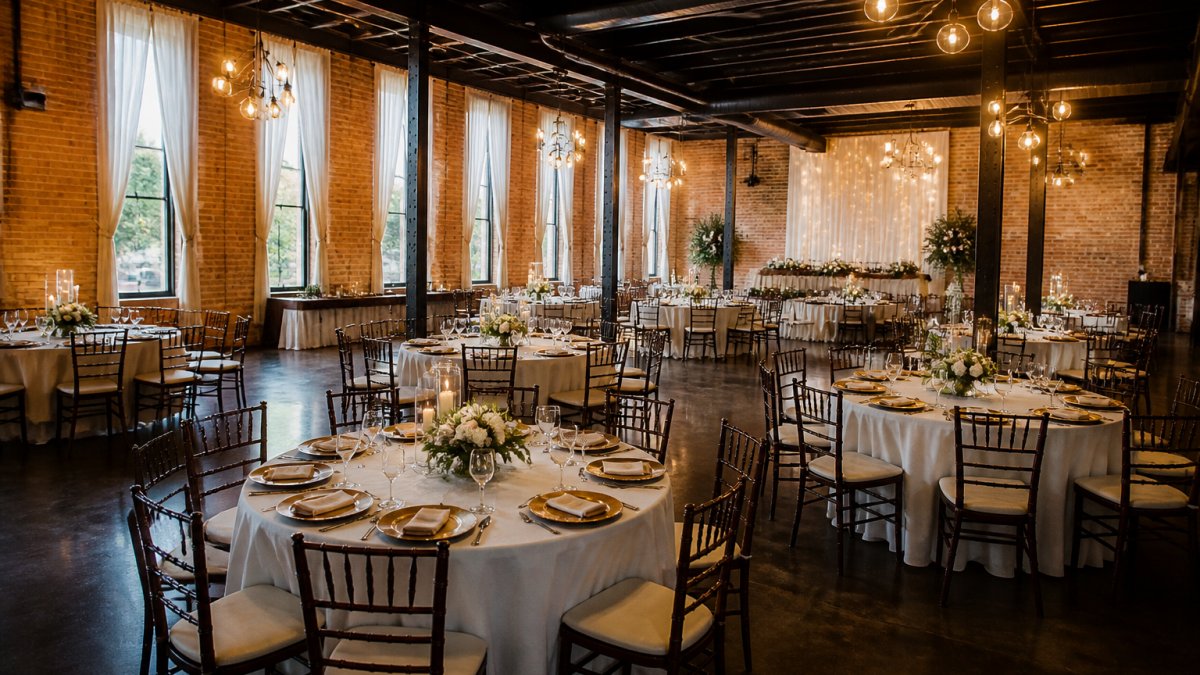
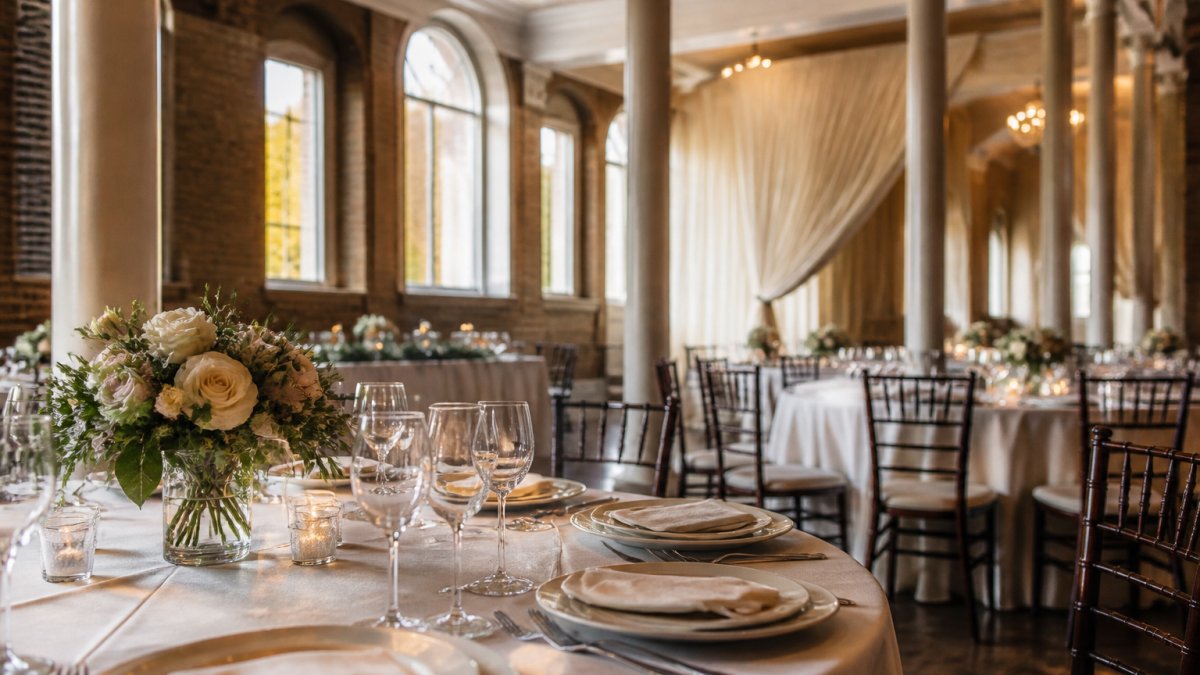
At 1835 Event Hall, our restored 1870 building in downtown Covington pairs historic character with modern amenities and a rustic speakeasy.
When you tour, bring the questions above and ask about setup flexibility, sound and lighting capacity, and accessibility routes. Our guide on how to ask historic wedding venues the right questions gives you the exact script for the visit.
The couples who host well are the ones who plan the budget before the guest list and read the contract before the deposit.
Frequently Asked Questions
What is a realistic wedding budget in 2026?
Two major surveys put the national average near the same range. The Knot's 2026 Real Weddings Study reports $34,200 across 10,474 couples who married in 2025, while Zola's First Look Report puts it at $36,000 from more than 11,500 couples. Treat those as benchmarks, not targets. Your real number depends on guest count, season, and venue. Venue and catering typically absorb the largest share, so settle those two lines first and build everything else around what remains.
What should I look for in wedding venues before booking?
Start with capacity and layout: ask how the room feels at your actual guest count, not the maximum. Then confirm what the rental fee includes versus what costs extra, from tables and linens to setup and cleanup. Ask about accessibility for elderly guests and wheelchair users, sound and lighting capability, and any restrictions tied to the building's age. Get the answers in writing. A venue that answers these plainly before you sign usually runs a smoother event day.
What is the recommended timeline for booking a wedding venue in 2026?
Book the venue 10 to 12 months out for a Saturday in peak season, and earlier if you want a specific date. Venue first, then catering, photography, and entertainment, because those vendors book fastest on popular weekends. Requests for January and April weddings grew 1,210% year over year according to Roomblocks' 2026 report, so off-peak dates are drawing more competition than they used to. Lock the date before you commit to anything that depends on it.
What is trending for weddings in 2026?
Zola's 2026 report highlights vintage decor, first looks that include friends and family rather than only the couple, and hyper-personalized catering. Couples are also moving toward off-peak months, with January and April requests up sharply year over year. One countertrend worth noting: Vogue reports that nearly all the planners it consulted recommend skipping welcome gifts and favors, since many get left behind. If you include them, keep them small and personal.
How does inflation impact wedding planning costs for 2026?
Zola describes the $36,000 average as holding steady for a second consecutive year, which suggests headline costs have leveled rather than climbed. The pressure shows up in the details instead: rentals, catering per head, and staffing. Protect your budget by fixing the guest count early, since cost per guest drives catering and rental totals, and by getting every quote in writing with a validity window. Build a 5 to 10% contingency line so a mid-planning increase does not force cuts elsewhere.
How do I manage the guest list and RSVPs without losing track?
Set your guest count before you tour venues, because capacity and cost per guest both hinge on it. Build one shared spreadsheet with columns for invite sent, RSVP received, meal choice, and accessibility needs. Send save-the-dates 8 to 10 months out and invitations 8 to 10 weeks out, with an RSVP deadline three to four weeks before the event. Chase non-responders personally the week after the deadline; a single follow-up call recovers most stragglers.