 How-to
Indoor Wedding Venues With Modern Amenities: What to Expect
Last Updated: November 17, 2026
Quick Summary
Indoor wedding venues with modern amenities pair a climate-controlled, weather-proof ceremony and reception setting with updated lighting, sound, seating, and service features, letting you host the whole day inside without sacrificing style or comfort. A building's age tells you nothing about the guest experience, so ask what each specific amenity does for your guests on the day.
- Score each venue on a one-to-five checklist covering the room, sound and light, technology, logistics, and policies.
- Ask which capacity number a venue quotes, since layout drives comfortable guest count more than square footage.
- Get a written quote separating the base rental fee from every add-on so you can compare totals.
- Walk the full guest route from parking to restrooms in person to confirm accessibility.
- Ask what flexibility a venue offers if your guest count grows or a ceremony needs to shift rooms.
Table of Contents
- What Modern Amenities Actually Mean in an Indoor Wedding Venue
- Indoor Wedding Venue Amenities Checklist for Couples
- Indoor Wedding Venue Capacity and Layout: Matching the Room to Your Guest List
- Wedding Venue Rental Package Inclusions: What Should Be in the Contract
- Wedding Venue Questions to Ask Before You Sign
- Accessibility, Comfort, and Weather Backup at Historic Indoor Venues
- Tour 1835 Event Hall and See the Space for Yourself
- Frequently Asked Questions
What Modern Amenities Actually Mean in an Indoor Wedding Venue
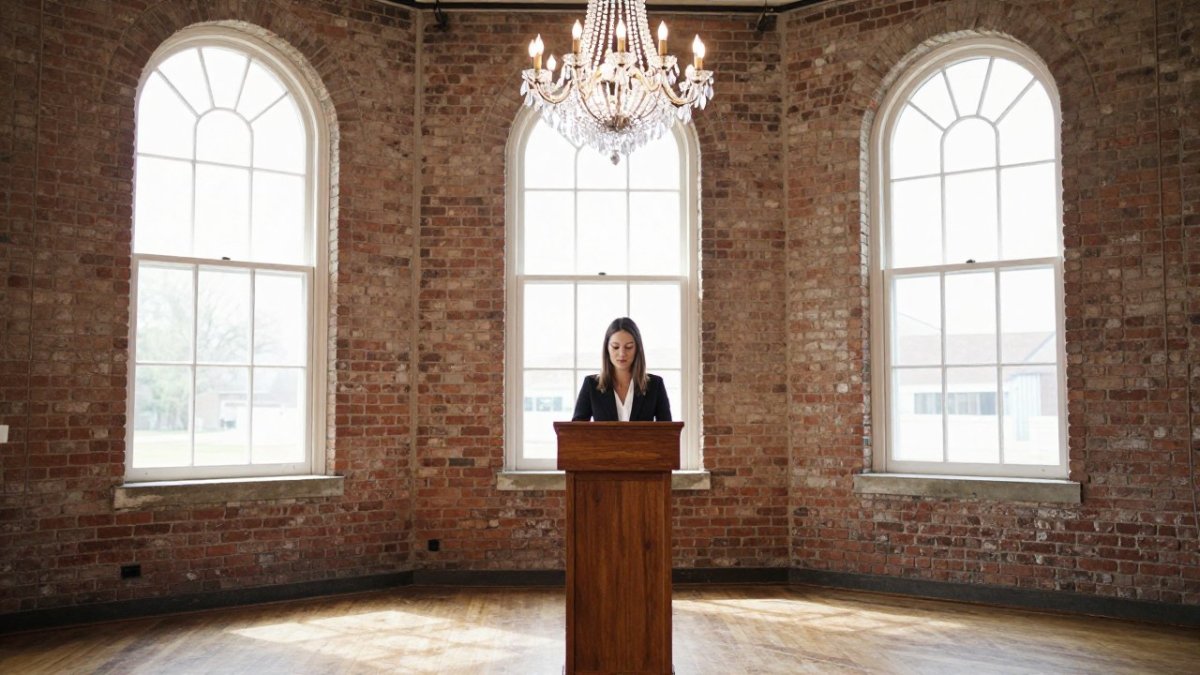
Indoor wedding venues with modern amenities are indoor wedding venues that pair a climate-controlled, weather-proof ceremony and reception setting with updated lighting, sound, seating, and service features. The best ones let you host the whole day inside without sacrificing style or comfort.
That definition matters more than it sounds. Plenty of halls advertise "modern amenities" and mean nothing beyond a working outlet and a folding table. Couples touring spaces in Miami County quickly learn to separate the two.
A building from 1870 can absolutely deliver modern comfort, and a brand-new ballroom can absolutely feel dated. The building's age tells you nothing about the guest experience. What matters is what's been updated and how it's operated.
The most useful filter is simple: ask what a specific amenity does for your guests on the day. Movable furniture and adjustable lighting change how a reception feels. A decorative sign does not.
For a deeper look at how restored halls handle this balance, see our guide to modern amenities in historic event halls.
Indoor Wedding Venue Amenities Checklist for Couples
Use this checklist to score each venue you tour. Rate every line from one to five, then total the scores and compare venues side by side.
The room itself
- Climate control you can adjust during the event, ideally zoned so the ceremony area and dance floor can be set differently
- Movable tables and chairs, not fixed banquet seating
- Lounge seating for guests who need a break from dancing
- A built-in bar or a dedicated bar area with adequate queue space
- A photo wall or defined photo opportunity spot
- Ceiling height and column placement that do not block sightlines to the head table or ceremony arch
Sound and light
- A sound system with audio equipment for speeches and music, and a clear answer on whether a DJ or band can patch into it
- [ ]
- Natural light during daytime events, with blackout options for projection or evening transitions
- Enough outlets for a DJ, band, or AV setup, and knowledge of the circuit capacity so a band does not trip a breaker
- A microphone setup for officiant and toasts, tested on the tour
Technology and operations
- Wi-Fi that reaches the ceremony and reception areas, with a separate guest network if the venue offers one
- Audiovisual equipment on site or a clear policy for outside AV vendors
- Lighting controls the venue or your planner can operate without calling maintenance
- Backup power or a generator plan for outages, especially for evening events
- A venue contact on site for the full event, not just during setup
- A written floor plan and a staff member who can walk it with you
Practical logistics
- Accessible parking near the entrance
- Restrooms that handle a full guest count, including at least one accessible stall
- Step-free access and clear pathways from parking to ceremony to reception
- A weather backup plan, even for an indoor event, including a room that can absorb a larger guest count
Policies
- Catering rules, including whether outside food is allowed and any kitchen access
- Vendor access times for setup and teardown
- Event cleanup responsibilities and any cleaning fee
- Layout assistance before the day and who is responsible for the final reset
A venue that scores well on the room but poorly on logistics and technology will cost you in stress. Weight the practical and technology lines heavily.
Score each venue you tour on these amenity groups, then total the scores and compare side by side.
| Amenity group | What to check |
|---|---|
| The room itself | Adjustable climate control, movable tables and chairs, lounge seating, bar area |
| Sound and light | Sound system for speeches and music, natural light with blackout options, outlets |
| Technology and operations | Wi-Fi in ceremony and reception areas, on-site AV, backup power plan |
| Practical logistics | Accessible parking, restrooms for full guest count, step-free access, weather backup |
| Policies | Catering rules, vendor access times, cleanup responsibilities, layout assistance |
Indoor Wedding Venue Capacity and Layout: Matching the Room to Your Guest List
Guest capacity is the number of people a room holds comfortably with your chosen layout. Always ask which number a venue is quoting.
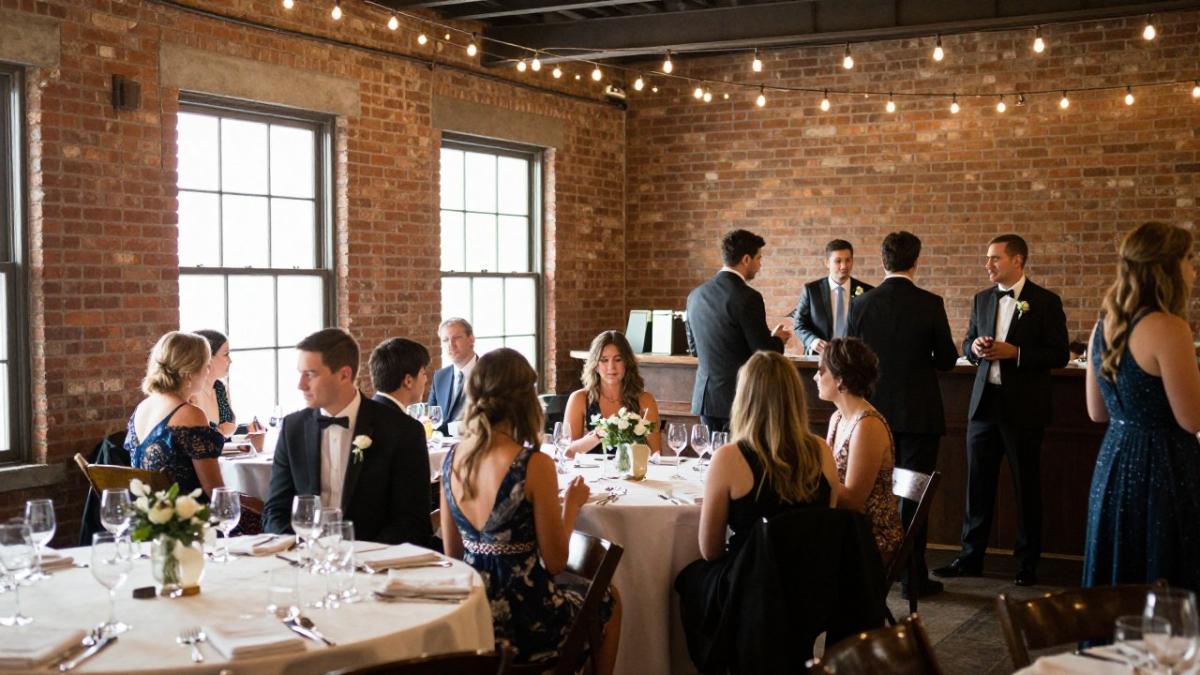
Layout drives this more than square footage. Round tables spread wider than rectangular ones. A dance floor eats space. A built-in bar changes traffic flow.
If you're planning a larger event, our guide to choosing venues for 150 guests walks through the space math in detail.
Ask for a floor plan drawn to your guest count before you sign. A floor plan helps you judge whether the room feels generous or packed.
Wedding Venue Rental Package Inclusions: What Should Be in the Contract
A venue rental package should list, in writing, exactly what the fee covers. Anything not listed is an extra. Ask what the total cost will be once any extras are added.
Vague packages are where budgets break. Before signing, confirm these items in writing:
- Rental hours, including setup and teardown time, and the hourly rate for overtime
- Whether tables and chairs are included or rented separately
- Whether staffing is billed by the hour or included
- Catering requirements and outside food rules
- Vendor access windows and any vendor restrictions
- Cleaning fees, overtime fees, and damage deposits, with the refund conditions spelled out
Building a total-cost comparison
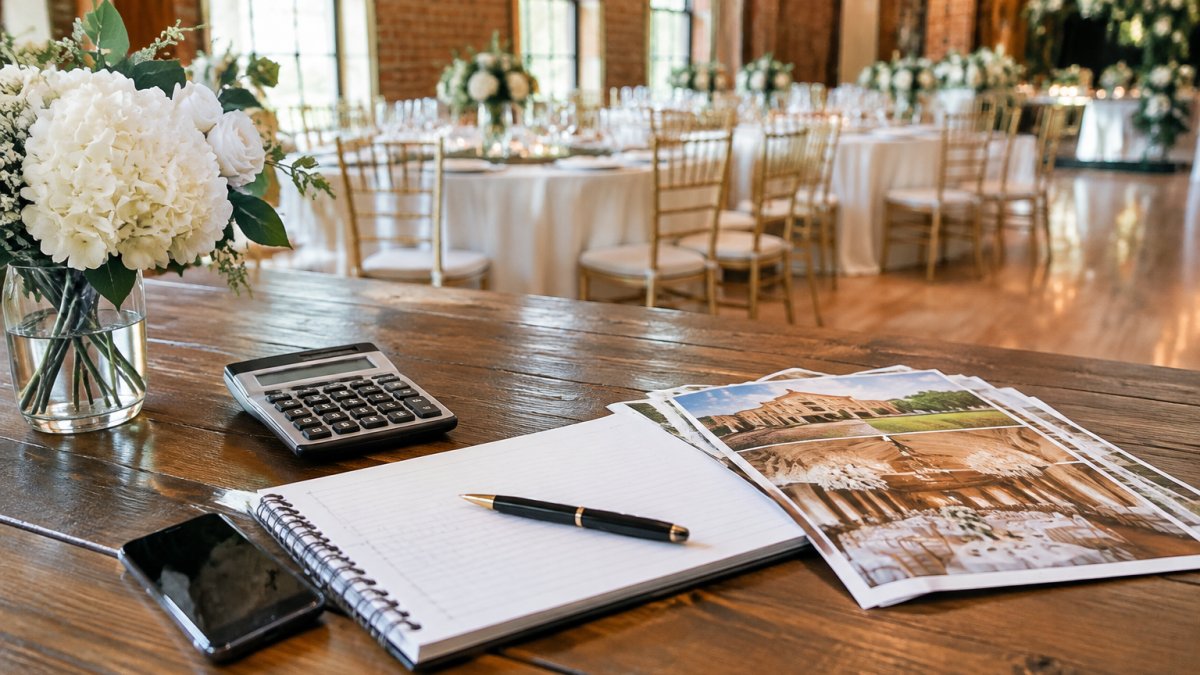
Ask every venue for a written quote that separates the base rental fee from each add-on. Venues often structure fees differently, so compare the totals rather than the headline number.
A practical way to do this is to build a one-page comparison sheet with a column for each venue and a row for every line item above. Fill in the quoted amount or mark it as included, and total the columns. This forces an apples-to-apples comparison instead of relying on promotional descriptions.
Questions that surface hidden costs
-
What is the total for our date and guest count, including every fee and service charge?
-
Which items are included in the base fee, and which are billed per guest or per hour?
-
What is the deposit, when is the balance due, and what is the cancellation policy?
Our breakdown of hidden costs in venue contracts covers the line items couples most often miss.
Pricing depends on your date, guest count, and package, so ask the venue directly for a written quote rather than relying on a general figure. A transparent venue will put every fee in one document and walk you through it line by line.
Wedding Venue Questions to Ask Before You Sign
Ask these questions on the tour, not after. The answers reveal how the venue actually operates on event day.
- What is the capacity for our specific layout, not the standing maximum?
- What exactly is included in the rental fee, and what costs extra?
- Can we move furniture, and are there restrictions because of the building's age?
- How does the sound system handle a DJ or live band?
- What is the weather backup plan if a guest count shifts indoors?
- Is the space accessible for wheelchair users and older guests?
- What are the vendor access and setup times?
- Who handles cleanup, and what does that include?
- Can we see photos from real events held here?
That last question matters. Ask for full galleries, not a highlight reel. For a focused list, read how to ask historic wedding venues the right questions.
Accessibility, Comfort, and Weather Backup at Historic Indoor Venues
Accessibility is the amenity couples forget to check and guests remember. A historic building can be fully accessible, but only if the venue has done the work.
Walk the route your guests will take. From parking to entrance, entrance to ceremony seating, seating to restrooms and the bar. If anyone in your family uses a wheelchair or has trouble with stairs, test that path in person.
Climate control matters just as much in an older building. Ask how a venue handles a hot afternoon or a cold evening.
Weather backup is the quiet advantage of an indoor venue. You already have a roof. Ask what flexibility a venue offers for a guest count that grows or a ceremony that needs to shift rooms.
Our guide on what to know before booking a historic event hall covers these comfort and backup details in more depth.
Tour 1835 Event Hall and See the Space for Yourself
Photos help. Standing in the room settles it.
1835 Event Hall is a restored 1870 building in downtown Covington with exposed brick, original tin ceilings, and a rustic speakeasy. You can see the space in person and ask your questions.
Bring your guest count, your must-have list, and your questions to your visit.
Get started with 1835 Event Hall and tour the hall before you book.
Frequently Asked Questions
What modern amenities should an indoor wedding venue have?
Look for climate control, a built-in sound system with audio equipment for speeches and music, adjustable lighting, accessible restrooms, and parking. Tables, chairs, and lounge seating should be included or available. A venue that also offers layout assistance, vendor access for catering, and a weather backup plan covers the practical needs most couples forget to ask about until the week before.
How much should I budget for an indoor wedding venue?
Budget depends on guest count, date, and what the rental package includes. Ask each venue for a written breakdown of the base fee, overtime charges, setup and cleanup, and any required vendor fees. Compare totals rather than headline rates, since a lower base price with add-ons can cost more than a package that bundles tables, chairs, and staffing.
What questions should I ask when touring an indoor wedding venue?
Ask about maximum guest capacity and how the room is laid out for both ceremony and reception, what the rental package includes versus what costs extra, whether outside catering is allowed, and how sound and lighting are handled. Also confirm accessibility for elderly guests and wheelchair users, parking, setup and cleanup windows, and what happens if you need to change the layout last-minute.
How can I tell whether a venue can accommodate my guest count and layout?
Ask for the square footage and the maximum seated capacity, then request a floor plan showing table placement for your guest count. A room that seats 150 in rows may feel tight with round tables, a dance floor, and a bar. Tour the space at a similar setup if possible, and ask how lounge seating and a photo wall affect the flow.