 How-to
How to Ask Historic Wedding Venues the Right Questions
Last Updated: November 1, 2026
Quick Summary
Ask historic wedding venues about preservation rules first: whether nails, tape, or adhesive are banned on original surfaces, whether real candles and confetti are permitted, and what approved hanging methods exist. Then confirm permits, insurance certificates due 30 to 60 days out, accessibility routes, and backup-space fees in writing.
- Ask for the seated guest capacity, not the standing maximum, since columns and fireplaces reduce usable floor space.
- Request the venue's written rules document, because preservation policies are often a separate contract addendum.
- Confirm who decides to move the event indoors and by what cutoff time, such as 10 a.m. on the event day.
- Ask whether a tent must be a frame tent with water barrels if staking would damage heritage landscaping.
- Do not assume the backup space is included; some historic venues charge a separate fee or require advance reservation.
Table of Contents
- Why Historic Wedding Venues Need a Different Set of Questions
- Questions to Ask a Wedding Venue Before Booking: The Core List
- Your Historic Wedding Venue Tour Checklist
- Historic Venue Wedding Restrictions You Should Confirm Early
- Building a Wedding Venue Backup Plan for Bad Weather
- Hidden Costs and Fees to Ask About Before You Sign
- Book a Tour at 1835 Event Hall and Ask in Person
- Frequently Asked Questions
Why Historic Wedding Venues Need a Different Set of Questions
Historic wedding venues come with charm you cannot build and rules you cannot ignore.
That gap is where good planning starts. A standard venue checklist covers cost and capacity. A historic property adds preservation rules, aging systems, and permit questions on top.
Before you tour, it helps to get the broader picture on what to know before booking a historic event hall.
Questions to Ask a Wedding Venue Before Booking: The Core List
The best questions to ask a wedding venue before booking cover five things: dates, guest count, layout, money, and rules. Ask them in that order. Each answer changes what you ask next.
Start with the practical list below, then layer on the historic-specific items. For a fuller general checklist of venue criteria, see what to look for in wedding venues.
Date Availability, Guest Capacity, and Room Layout
Ask one question first: is our preferred date open, and what alternative dates come with better terms?
Then confirm guest capacity against comfortable occupancy. A room that holds 200 for a standing reception may seat far fewer at round tables.
Layout matters just as much:
- Where does the ceremony end and the reception begin?
- How much setup time is included?
- Can tables be reconfigured mid-event?
In older buildings, columns, fireplaces, and stairwells eat into usable floor space. Ask to see a floor plan with furniture drawn in.
Rental Fees, Deposits, and What the Contract Covers
Get the venue rental fee in writing, then ask what it actually includes. Tables and chairs? Staffing? An event coordinator? Cleaning?
Next, pin down the money terms:
- Deposit amount and due date
- Payment schedule leading up to the event
- Refund and cancellation policy
For a sense of how quotes are typically structured, you can compare our tour notes with your own budget. Pricing depends on date, guest count, and included services, so request a current quote from 1835 Event Hall directly.
Your Historic Wedding Venue Tour Checklist
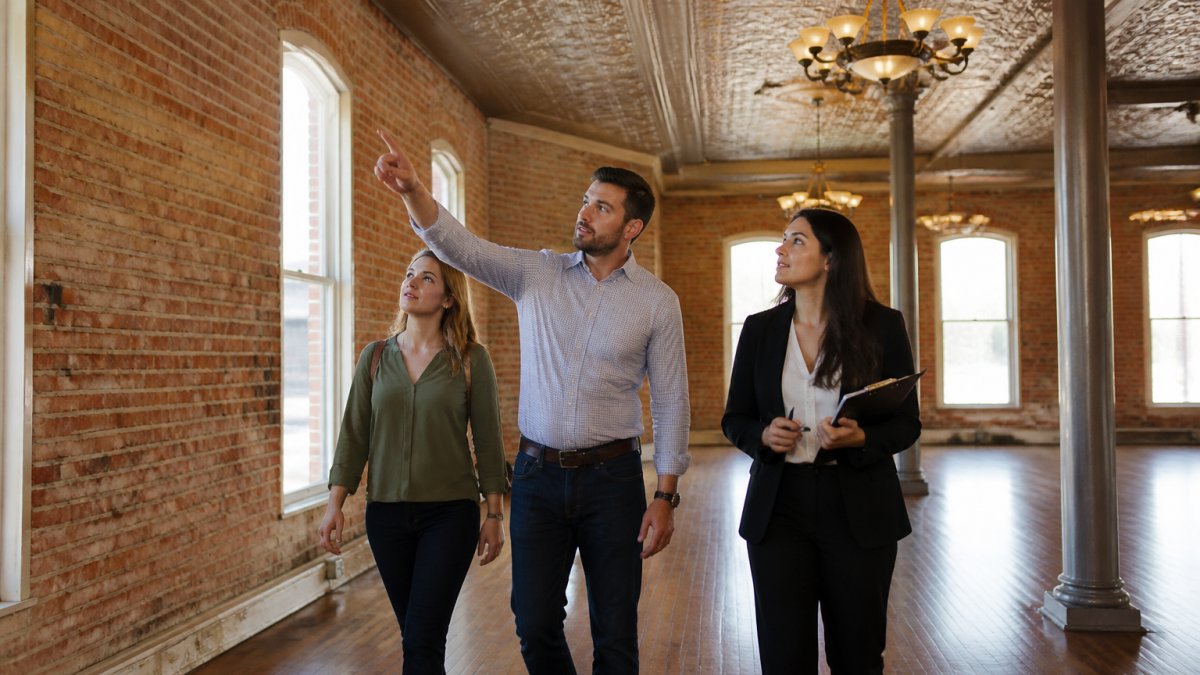
Bring this checklist to the tour and write answers down. Memory fades fast after three venue visits in one weekend.
Before you go:
- Confirm the tour covers the whole event space, not just the main hall
- Ask to see the backup space and the getting-ready rooms
- Bring your guest count and a rough budget
On the tour:
- Check power outlets, lighting controls, and sound setup
- Walk the route elderly guests and wheelchair users would take
- Look at the restrooms and parking
Before you leave:
- Request the full contract and fee schedule
- Ask to see examples of past events held in the space
- Confirm who your point of contact will be
Historic Venue Wedding Restrictions You Should Confirm Early
Historic venue wedding restrictions are the single most overlooked topic in venue planning. Many couples assume the rules mirror a hotel ballroom. They rarely do. In a building that predates modern construction standards, every nail hole, candle, and piece of confetti is a preservation decision, and the venue's rules exist because someone has already repaired the damage once.
Ask about restrictions before you fall in love with a decor plan, not after. The answers shape your florist's install plan, your photographer's shot list, and your day-of timeline.
Preservation Rules, Decor Limits, and Vendor Policies
Start with the surfaces. Original plaster, exposed brick, tin ceilings, and historic woodwork are the features you are paying for, and they are also the features most easily damaged. Ask specifically:
- Hanging and attaching. Can you hang anything on original surfaces? Most historic properties prohibit nails, screws, tape, adhesive strips, and staple guns on plaster, brick, and tin. Ask what the approved method is, often freestanding arches, weighted bases, or tension rods that touch nothing original.
- Open flame. Ask whether real candles, taper candles, unity candles, and open-flame chafing dishes are permitted. Many historic venues require enclosed LED candles or hurricane glass, and some prohibit flame entirely. Confirm whether a candle policy changes for outdoor spaces versus interior rooms.
- Confetti, rice, petals, and sparklers. Ask what is banned indoors and outdoors, and whether the ban covers biodegradable products too. Historic grounds often prohibit confetti and rice because cleanup damages landscaping and masonry, and sparklers near older roofs and wooden trim are frequently off-limits.
Then ask about vendor policy. Some venues require preferred vendors for catering or bar service. Others allow outside vendors with a fee. Ask whether your florist and rental company need to submit an install plan or certificate of insurance, and whether the venue requires a walkthrough before load-in.
Photography rules often follow the same logic. See historic venue wedding photography tips to understand how preservation and decor rules affect photos. Preservation rules can also shape shot lists, so ask your photographer about them early.
Permits, Insurance, and Accessibility in Older Buildings
Ask whether the venue holds the permits or whether you need your own. Confirm insurance requirements and any certificate the venue needs from you.
Accessibility deserves its own conversation. Older buildings have steps, narrow doorways, and uneven floors. Ask directly:
- Is there a step-free entrance, and where is it relative to guest parking?
- Where are the accessible restrooms, and are they on the same level as the reception?
- Is there a lift or elevator, and what is its weight capacity and operating window?
Get answers on site, not over the phone. Walk the route yourself, and ask a staff member to walk it with you.
Before you fall in love with a decor plan, confirm what the preservation rules allow on original surfaces.
| Restriction area | What to ask | Typical historic-venue answer |
|---|---|---|
| Hanging and attaching | Can you hang anything on original surfaces? | Nails, screws, tape, adhesive strips, staple guns often prohibited |
| Approved hanging method | What method is permitted? | Freestanding arches, weighted bases, tension rods touching nothing original |
| Open flame | Are real candles and chafing dishes allowed? | Enclosed LED candles or hurricane glass; some prohibit flame entirely |
| Confetti, rice, petals, sparklers | What is banned indoors and outdoors? | Often banned, including biodegradable products; sparklers off-limits near older roofs |
| Furniture movement | Can original furniture, pianos, artwork be moved? | Some properties require venue staff to relocate anything original |
| Smoke, fog, haze | Can your DJ or photographer use fog effects? | Residue and moisture can affect finishes and trigger fire-alarm sensors |
| Insurance certificate | What does the venue need from you? | Special-event liability policy naming venue, due 30 to 60 days before |
Building a Wedding Venue Backup Plan for Bad Weather
A wedding venue backup plan for bad weather should be settled before you sign, not the week of. Ask where guests go if it rains, and how quickly the space can flip. Then go further, because historic properties add contingencies a modern ballroom never has to consider.
The Standard Questions, Answered in Writing
Confirm the basics first:
- Who decides to move indoors, and by what time? Get a specific cutoff, such as a decision by 10 a.m. on the event day.
- Does the backup space hold your full guest count for a seated dinner, not just a standing reception?
- How long does the flip take, and who performs it, venue staff, your planner, or your rental crew?
Historic-Site Weather Contingencies Competitors Skip
This is where a historic venue differs most. Ask these before you sign:
- Tent permissions. Can a tent be staked on the grounds, or does the property require a frame tent with water barrels because staking would damage heritage landscaping or underground systems? Ask whether the venue has a preferred tent vendor and whether a tent permit is required.
- Drainage and terrain. Ask where water pools on the grounds, whether paths become muddy or slick, and whether guests in formal shoes can move between buildings without crossing grass. Walk the route in bad weather if you can.
- Fragile interiors. Ask whether the backup space is an original room with plaster, wood floors, or textiles that limit humidity, condensation, or wet guests tracking in water. Some properties require mats or a coat-and-boot check at the door.
Finally, ask who has authority to trigger the flip on the day, the venue coordinator, your planner, or you, and put that name in the contract. On a historic property, the decision often involves facilities staff as well as event staff, and knowing who calls it prevents a last-minute scramble.
Hidden Costs and Fees to Ask About Before You Sign
Hidden costs are the reason couples dread the contract. Ask about every line item out loud, then find it in writing.
Watch out: a quote that looks complete can still exclude service charges, overtime, and staffing. Ask what triggers each fee.
Ask about the fees couples most often miss before signing.
Book a Tour at 1835 Event Hall and Ask in Person
Some answers only make sense in the room. At 1835 Event Hall, our restored 1870 building features exposed brick and original tin ceilings. We invite you to walk through the space, see the speakeasy, and ask every question on this list face to face.
Contact 1835 Event Hall to book a tour and see the hall for yourself.
Frequently Asked Questions
What should I look for when touring a historic wedding venue?
Bring a written checklist and look beyond the decor. Check the condition of floors, stairs, and doorways, and test whether the sound and lighting systems handle a full guest count. Ask where the ceremony and reception each take place, how setup and breakdown are scheduled, and whether the room feels comfortable at your guest count rather than packed. Confirm what tables, chairs, and amenities are included, and ask to see photos from past weddings in the same spaces.
What restrictions should couples expect at a historic wedding venues?
Expect rules that protect the building: limits on open flames, nails, tape, and hanging decor, plus designated areas for food and bar service. Many historic wedding venues also require preferred or approved vendors who know the space, set noise and event-duration limits, and restrict access to certain architectural features. Ask for the restriction list in writing before you sign, and confirm how last-minute layout changes are handled given the building's age.
How do historic venues handle weather and backup ceremony plans?
Ask where the indoor ceremony moves if it rains, how many guests that space holds, and how much notice you must give to switch. Confirm who makes the call and at what time. For outdoor photos, ask which covered areas or interior features are available and whether the venue has a wedding venue backup plan for bad weather written into the contract. Seasonal risks like heat, snow, and parking access in older lots are worth raising on the tour.
What fees should I ask about before booking a wedding venue?
Ask for the full list: venue rental fee, deposit amount and due date, payment schedule, minimum spend on food and beverage, taxes, cleaning fees, overtime fees, and any charge for staffing or an event coordinator. Confirm the cancellation policy and refund terms, and whether setup and breakdown time is included in the event duration. Get every number in the contract so nothing arrives as a surprise invoice later.