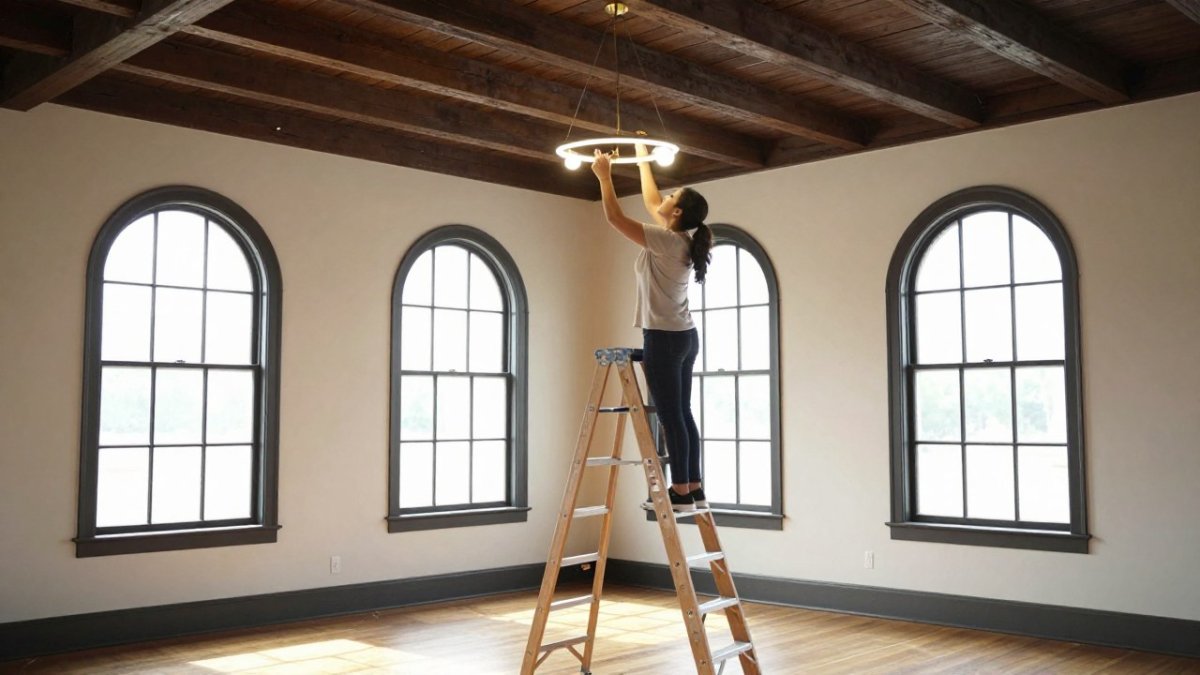
 How-to
Modern Amenities in Historic Event Halls: A Practical Guide
Last Updated: November 7, 2026
Quick Summary
Modern amenities in historic event halls are the systems and services that make an old building comfortable and functional for today's events: climate control, reliable power, fast Wi-Fi, good lighting, and accessible layouts. The appeal of exposed brick and original tin ceilings only works when guests are comfortable.
- Ask whether the hall has zoned heating and cooling or one thermostat for the whole space.
- Confirm the number of dedicated circuits serving the main room before signing.
- Use the historic wedding venue checklist to compare venues on the same terms.
- Confirm what audiovisual equipment is built in, what you must rent, and who operates it.
- Request written line-item quotes using identical assumptions and total the bottom line.
Table of Contents
- What Modern Amenities Should You Expect in Historic Event Halls?
- A Historic Wedding Venue Checklist for Modern Comforts
- Event Venue Audiovisual Equipment: What to Confirm Before Booking
- Historic Venue Accessibility: Planning for Every Guest
- Historic Venue Wedding Photography Tips for Modern Lighting
- Balancing Preservation with Technology Upgrades
- Amenity Costs and What Is Included in the Rental
- Tour 1835 Event Hall and See the Amenities in Person
- Frequently Asked Questions
What Modern Amenities Should You Expect in Historic Event Halls?
Modern amenities in historic event halls are the systems and services that make an old building comfortable and functional for today's events: climate control, reliable power, fast Wi-Fi, good lighting, and accessible layouts. The appeal of exposed brick and original tin ceilings only works when guests are comfortable.
That's the tension every historic venue has to solve. You want the character of a building from 1870 and the comfort of a space built last year. A National Park Service preservation framework shows that updates to historic buildings follow four treatment standards, so preservation and modern upgrades can coexist.
Below, we'll show you exactly what to check before you book, from climate control to connectivity, and how to spot the venues that got the balance right. For a practical list of questions to ask venues about amenities and comforts, see our guide on how to ask historic wedding venues the right questions.
Climate Control and Guest Comfort
Climate control is the amenity guests notice first, and the one historic buildings struggle with most. Old halls were built before air conditioning existed. Thick walls, high ceilings, and single-pane windows make temperature hard to manage.
Ask three questions on your tour:
- Does the hall have zoned heating and cooling, or one thermostat for the whole space?
- How does the system handle a full room of guests on a warm evening?
- Are there ceiling fans or portable units for backup?
Guest comfort goes beyond temperature. Comfortable seating, clean restrooms, and a quiet space for older guests all matter. A peer-reviewed study on sustainable events in historic buildings found that matching an event to a building's real capacity protects both the guest experience and the structure itself.
Power, Wi-Fi, and Connectivity
Reliable power and high-speed Wi-Fi are non-negotiable for modern events. Your DJ, caterer, photographer, and speakers all need outlets. Corporate guests expect a strong signal.
Confirm these details before signing:
- How many dedicated circuits serve the main room?
- Is there Wi-Fi for guests, and does it hold up with a full room of connected phones?
- Where are the outlets, and do they reach the stage and catering area?
Historic halls often have limited original wiring, so it is worth asking whether a venue has upgraded its electrical service. A venue that cannot tell you its circuit count is worth questioning.
A Historic Wedding Venue Checklist for Modern Comforts
A historic wedding venue checklist should cover comfort, technology, and logistics in one pass. Use this list on every tour so you compare venues on the same terms.
- Climate control zones and backup cooling
- Guest Wi-Fi strength and coverage
- Outlet and circuit count for vendors
- Audiovisual equipment included vs. rented
- Step-free entry and accessible restrooms
- Backup plan for last-minute layout changes
- What the rental fee includes and what costs extra
Print it, bring it, and use it to compare each venue. A venue that answers every line without hesitation is one worth a closer look.
Use this checklist on every tour so you compare venues on the same terms.
| Checklist item | What to confirm |
|---|---|
| Climate control | Zones and backup cooling |
| Guest Wi-Fi | Strength and coverage |
| Power | Outlet and circuit count for vendors |
| Audiovisual equipment | Included vs. rented |
| Accessibility | Step-free entry and accessible restrooms |
| Layout changes | Backup plan for last-minute changes |
| Rental fee | What is included and what costs extra |
Event Venue Audiovisual Equipment: What to Confirm Before Booking
Event venue audiovisual equipment is the sound, lighting, and projection gear a venue provides or supports. Confirm what's built in, what you must rent, and who runs it. This is where corporate planners and couples both get surprised.
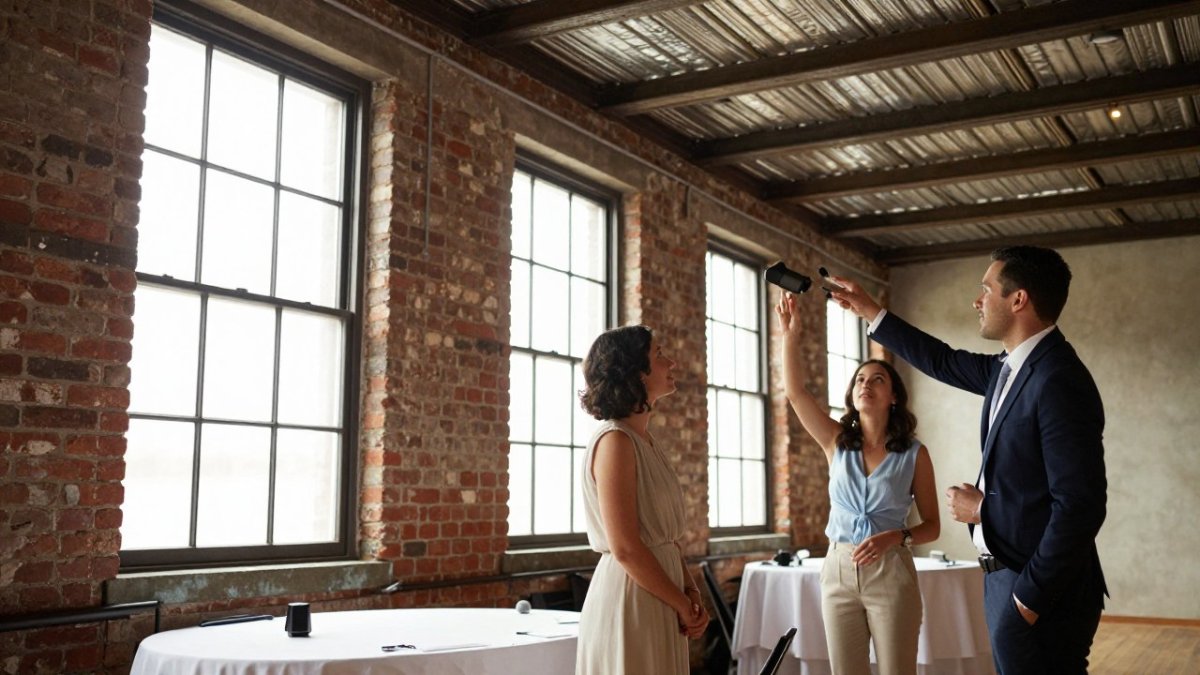
Ask these questions before you book:
- Does the hall have a built-in sound system, or do you bring your own?
- What lighting is installed, and can it be dimmed for dinner and brightened for dancing?
- Is there a projector and screen, and where can they mount?
- Who operates the equipment, and is that included?
Sound and lighting can make the difference between a smooth corporate meeting and a room full of people straining to hear. Confirm what a historic venue can actually support before you book.
Historic Venue Accessibility: Planning for Every Guest
Historic venue accessibility is the area where old buildings most often fall short. Original steps, narrow doorways, and uneven floors can create real barriers, even after a renovation.
A historic venue planning guide notes that updated buildings may still present access hurdles from original features. That doesn't disqualify a venue, but you need the facts up front.
Ask about:
- Step-free entry and a ramp at the main entrance
- Accessible restrooms on the same floor as the event
- Elevator access if the event spans multiple levels
- Space for wheelchairs at tables and in aisles
If you have elderly family members or a guest in a wheelchair, walk the route yourself during the tour. Inclusive planning means every guest gets around comfortably, not just most of them.
Historic Venue Wedding Photography Tips for Modern Lighting
Historic venue wedding photography depends on how well the venue's lighting works with a camera. Modern LED lighting and dimmers can flatter a room or wreck your photos, depending on the setup.
A few practical tips:
- Ask the venue for its lighting color temperature and whether it dims smoothly.
- Bring a photographer who has shot in low light and mixed light.
- Time your portraits near windows for natural light.
- Request a lighting test before the event day.
Couples want custom lighting and creative layouts, and a 2026 venue-trends roundup lists both as top requests. Good lighting design shows off the moldings and chandeliers instead of flattening them. For a deeper walkthrough, see our guide to historic venue wedding photography tips.
Balancing Preservation with Technology Upgrades
Balancing preservation with technology upgrades is the central challenge for any historic hall. You can't cut into original plaster for every new cable, and you shouldn't hide beautiful features behind equipment.
The workable approach is to route new systems through discreet paths, keep original features intact, and add technology that can be removed later. A venue example of a preservation-minded renovation describes a restoration that kept historic character while adding contemporary production infrastructure.
What this means for you as a client: ask how the venue added its upgrades. A hall that protected its moldings, tin ceilings, and original features while adding modern systems has done the hard work. One that covered them up has not.
Amenity Costs and What Is Included in the Rental
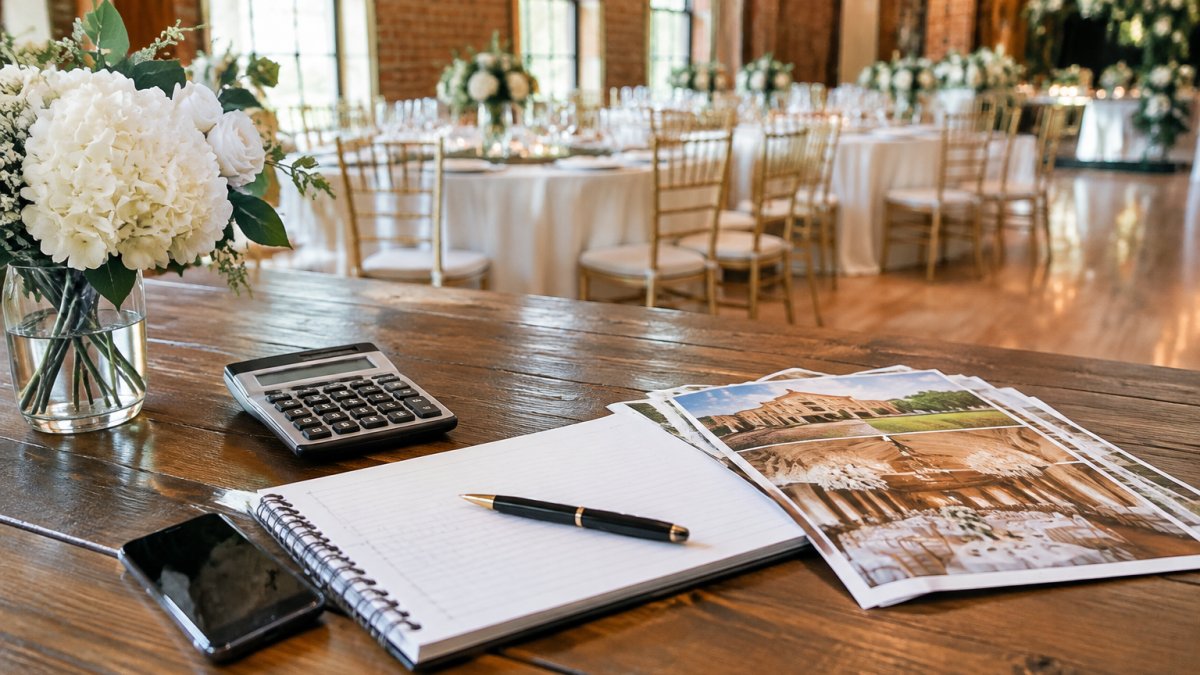
Amenity costs are where venue budgets quietly grow. The base rental fee often does not cover everything, and quotes with similar headline numbers can differ once inclusions and fees are compared. The fix is to stop comparing rental fees and start comparing written, line-item quotes on the same terms.
How venue pricing is usually structured
Historic halls commonly price in a few different ways, such as a flat rental fee for a block of hours, a per-person package, or a facility fee plus vendor requirements. Each structure hides different costs. A flat rental may leave you paying separately for tables, staff, and cleanup; a per-person package may carry minimum guest counts and service charges; a facility fee may come with a required caterer list that limits your choices. Ask which structure the venue uses before you ask for a number, because the structures are not directly comparable.
The inclusions checklist
Ask what the rental fee includes, and get the answer in writing from 1835 Event Hall:
- Tables, chairs, and linens, and whether upgrades are available and priced
- Audio-visual equipment and whether an operator is included or billed hourly
- Setup and breakdown time, and whether your rental clock includes it
- Staffing, security, and coat check
- Cleaning fees and any damage deposit and its refund terms
- Parking and any attendant costs
Then ask what costs extra: additional hours and overtime rates, outside vendor fees or catering buyouts, equipment rentals, early access for decorators, and any required insurance or permits. Some venues quote a low rental fee but charge separately for items such as tables, an AV operator, and after-hours staffing.
How to compare quotes line by line
Request a written quote from each venue using identical assumptions: the same date type (peak Saturday versus off-peak weekday), the same guest count, the same hours including setup and breakdown, and the same list of equipment. Then build a simple comparison sheet with one row per cost and one column per venue, and total the bottom line rather than the rental fee.
Watch out: a quote that omits service charges, staffing, or cleaning is incomplete, and the gaps can surface in the final invoice.
Budget mechanics to confirm before signing
Confirm the deposit amount and schedule, the cancellation and reschedule policy, the payment methods accepted, and whether gratuities are built into the contract, as these details vary by venue. Ask whether the venue's required vendor list carries its own fees, since preferred-caterer arrangements sometimes add a percentage on top of the caterer's bill. For realistic budget ranges, our average cost of historic wedding venues guide breaks down the numbers, and our article on hidden costs in wedding venue contracts covers the traps to watch for.
Tour 1835 Event Hall and See the Amenities in Person
The best way to judge modern amenities in a historic hall is to stand in the room. Photos hide weak Wi-Fi, noisy HVAC, and tight layouts.
At 1835 Event Hall, our 1870 building features exposed brick and original tin ceilings.
Ready to see it for yourself? Read what to know before you book a historic event hall, then schedule a visit and picture your event in the room.
The difference between a charming old hall and a truly comfortable one comes down to the details you check before signing.
Frequently Asked Questions
What amenities should an event venue include?
A well-equipped historic event hall should cover the basics that keep guests comfortable and the program running: working climate control, reliable power access, high-speed Wi-Fi, and a clear audio-visual setup. Ask whether tables, chairs, linens, and catering prep space are included or rented separately. Confirm restroom capacity, parking, and a backup plan for weather if outdoor space is part of the rental. Get the full inclusion list in writing so you can compare quotes fairly.
Can historic event halls accommodate modern audiovisual equipment?
Yes, though the setup varies by building. Some restored halls have updated electrical service and house sound, while others require you to bring in a production vendor. Before booking, ask about available circuits, whether the venue has a preferred audio-visual partner, and where speakers and screens can be placed without damaging original features. A site visit with your vendor is the most reliable way to confirm that the room will handle your event venue audiovisual equipment needs.
What should you check about accessibility at a historic event venue?
Ask specific questions rather than relying on a general claim that the building is accessible. Confirm whether there is a step-free entrance, an elevator or ramp to every event space, and accessible restrooms on the same floor. Check doorway widths, flooring transitions, and seating that works for wheelchairs and guests with limited mobility. If elderly family members are attending, ask about drop-off access and whether staff can assist. A short walkthrough with the people who will attend is the best test.
How can you preserve a historic venue's character while decorating it?
Work with the architecture instead of covering it. Exposed brick and original tin ceilings already provide texture, so lean on lighting, florals, and lounge-style seating to add personality without masking the room. Ask the venue what hanging methods are permitted and which surfaces cannot be taped or nailed. Historic preservation standards generally emphasize preserving original features, and venues that follow that approach often have clear rules for decorating safely.