 How-to
What to Know Before You Book a Historic Event Hall
Last Updated: October 28, 2026
Quick Summary
To book a historic event hall in Covington, confirm capacity, inclusions, access times, vendor rules, and cancellation terms in writing before paying a deposit. Ask for a line-item quote that separates the base fee from add-ons, taxes, and service charges, and get every verbal promise into the contract.
- Build a written booking checklist covering capacity, inclusions, access times, vendor rules, and cancellation terms before you tour.
- Request quotes in the same table format across venues so side-by-side line items expose hidden add-ons.
- A deposit holds a date but does not lock a price unless the contract says so.
- Ask about step-free entry, door widths, and restrooms on the event level for accessibility.
- Send caterer and decorator the venue's vendor rules before the walkthrough, not after.
Table of Contents
- Why a Historic Event Hall Changes How You Plan
- The Event Venue Booking Checklist That Prevents Costly Surprises
- Event Venue Availability and Pricing: What the Quote Should Tell You
- Event Hall Rental Questions to Ask Before You Sign
- Matching Guest Count, Floor Plan, and Accessibility to the Space
- Vendor, Catering, and Alcohol Rules in an Older Building
- Reserving Your Date at 1835 Event Hall
- Frequently Asked Questions
Why a Historic Event Hall Changes How You Plan
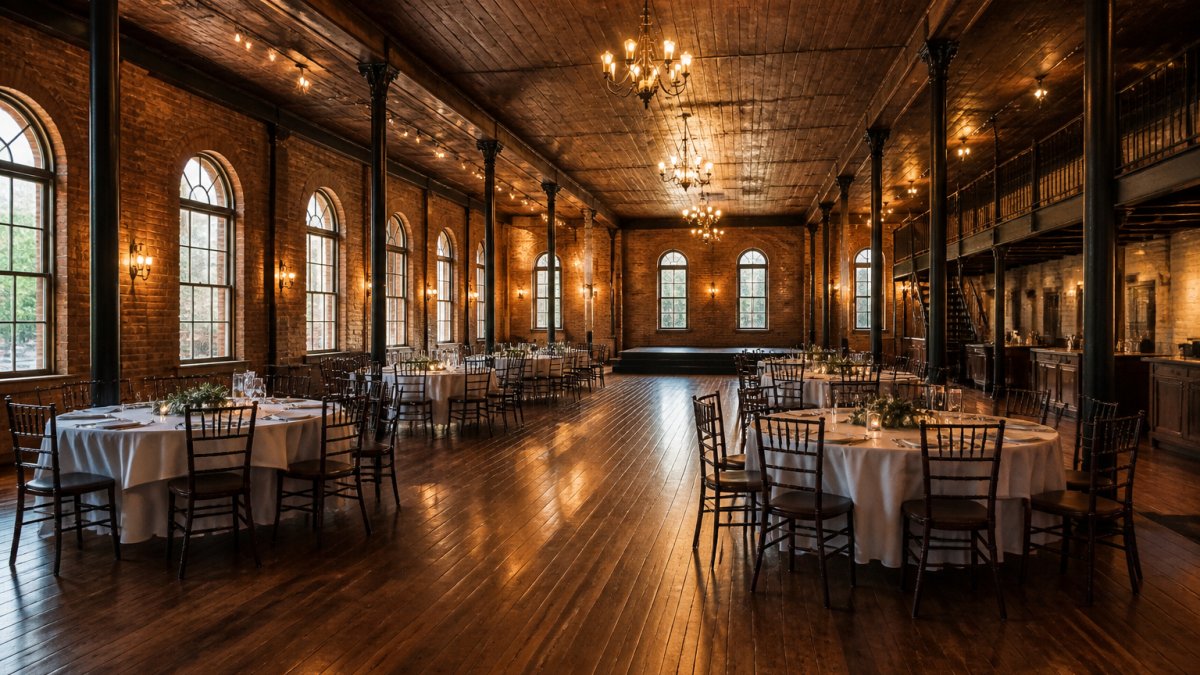
A historic event hall is a building with documented architectural heritage adapted for modern gatherings, and booking one means planning around constraints a new banquet facility does not have. At 1835 Event Hall, the structure was originally built in 1870.
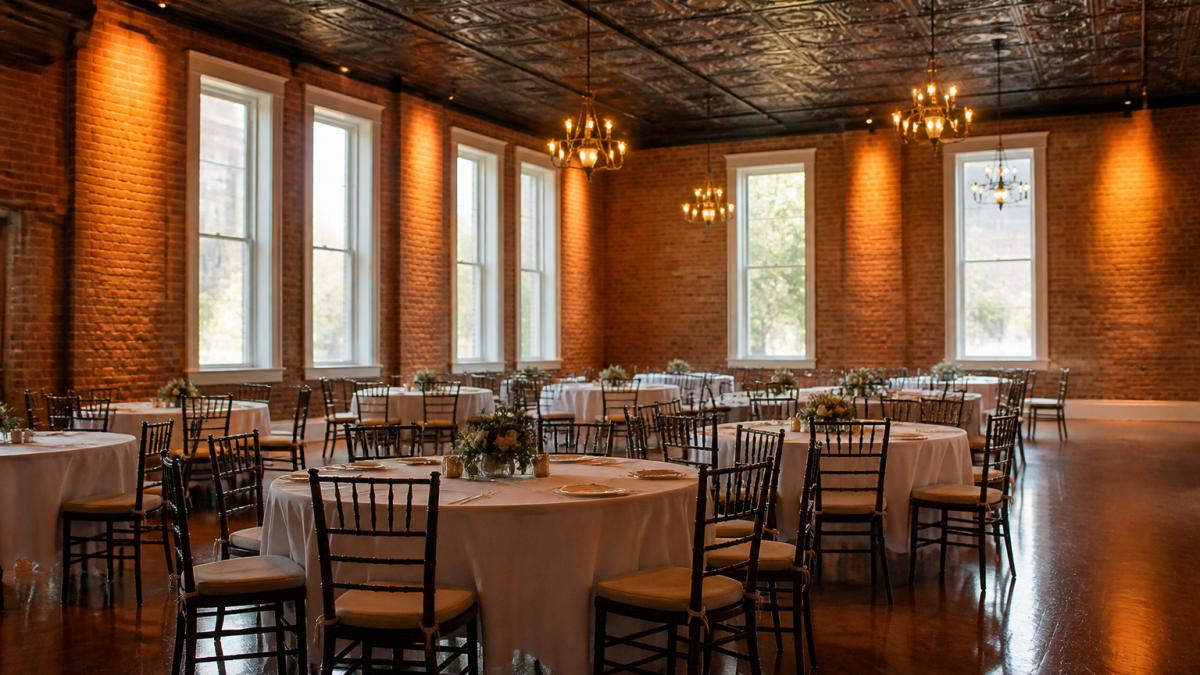
That is the trade-off. You get exposed brick and original tin ceilings.
Most guides treat charm and logistics as separate conversations. They are not.
The Event Venue Booking Checklist That Prevents Costly Surprises
An event venue booking checklist is a written list of things to confirm before paying a deposit: capacity, inclusions, access times, vendor rules, and cancellation terms. Build it before you tour.
Use this checklist at every tour:
- Maximum seated and standing capacity, in writing
- What the rental fee includes and what it does not
- Access time for setup and teardown, and whether it is billed hourly
- Approved caterers, or whether you can bring your own
- Alcohol rules: licensed server required, insurance, cutoff time
- Kitchen or prep space available, and what equipment is in it
- Accessible entry, restrooms, and interior routes
- Parking count and overflow plan
- Deposit amount, payment schedule, and refund terms
- Insurance requirements you must carry
- Decor restrictions: nails, tape, open flame, confetti
- Noise curfew and whether amplified music has limits
- Rain plan if any part of the event uses outdoor space
For a deeper walkthrough of what separates a good venue from a workable one, our guide on what to look for in wedding venues covers the evaluation criteria in more detail.
Watch out: verbal promises about early access or vendor flexibility can be a source of day-of friction. If it is not in the contract, plan as though it does not exist.
Event Venue Availability and Pricing: What the Quote Should Tell You
Ask for the quote in writing and read it line by line: a venue rental quote should separate the base fee from every add-on, tax, and service charge. A single number plus a deposit request is a placeholder, not a quote.
Availability works the same way. Popular dates, especially Saturdays in spring and fall, get held early, and many venues book more than a year out. If you have a specific Saturday in mind, check the calendar, not the brochure.
Most venue listings stop at "call for pricing." Here are items to ask about when comparing offers:
| Quote line | What to confirm | Why it matters |
|---|---|---|
| Base rental fee | Hours included, day of week | Saturday pricing often differs from weekday |
| Setup and teardown | Whether billed separately, and the hourly rate if so | Adds hours to your budget |
| Tables, chairs, linens | Count included, upgrade cost per item | Rentals add up fast at larger guest counts |
| Staffing | Whether required and included, or billed hourly | Often a separate line |
| Cleaning or damage deposit | Refundable or not, and the conditions | Affects your true total |
| Taxes and service charge | Percentage applied, and to which lines | Changes the bottom line |
| Alcohol service | Licensed server, insurance requirement, cutoff time | Frequently an add-on |
| Overtime | Hourly rate past the contracted end time | The most common surprise charge |
Three lines deserve extra scrutiny. Setup and teardown: confirm the access time and whether it is billed separately. Service charge: confirm whether it applies to the base rental only or to catering and bar too. Overtime: ask whether an additional charge applies if your event runs past the contracted end time.
Pricing for historic venues varies with date, guest count, and inclusions. A 60-guest shower and a 180-guest reception use the same room very differently. For benchmark ranges, our breakdown of the average cost of historic wedding venues gives you context before you negotiate.
Event Hall Rental Questions to Ask Before You Sign
The right event hall rental questions surface restrictions early, when you can still walk away. Ask them on the tour, in front of the person who will enforce the rules.
The questions that matter most:
- What is the latest our vendors can stay, and is there a hard cutoff?
- Who handles setup of tables and chairs, and when does that happen?
- Are there load-in restrictions because of the building's age or entry width?
- What is the policy if our guest count changes by twenty people?
- Can we schedule a walkthrough with our caterer before the event?
- What happens if we need to move the ceremony indoors at the last minute?
- Is there a preferred vendor list, and is it mandatory?
- How is the space heated or cooled, and who controls it?
A common mistake is accepting vague replies. Push for specifics. "We'll figure it out" is not an answer you want attached to a deposit.
The Ohio Secretary of State's business resources are worth checking if you are contracting with a vendor you have not worked with before, and the Better Business Bureau's guidance on contracts offers a plain-language primer on what a service agreement should contain.
Matching Guest Count, Floor Plan, and Accessibility to the Space
Guest count and floor plan must be settled together: a room that seats your list in rows may not seat the same list at round tables with a dance floor. Historic buildings rarely offer a clean rectangle, so ask for the actual layout, not just a capacity figure.
Older venues can have features that affect how tables fit. A space may feel different once you add a bar, buffet line, DJ, and gift table.
Accessibility deserves its own conversation. Ask about step-free entry, door widths, restrooms on the event level, and whether elderly guests can move between areas without stairs. If you have a guest in a wheelchair, ask for the route from parking to seat, not just whether the building is "accessible."
If your event is a professional gathering rather than a wedding, our guide on how to choose a venue for professional gatherings walks through the layout and logistics questions that matter most for corporate groups.
Vendor, Catering, and Alcohol Rules in an Older Building
Here is what to confirm, and why each item matters in an older building:
- Licensed caterer requirement. Most historic halls require a licensed and insured caterer rather than food prepared by family members. The reason is liability and food-safety exposure, not snobbery. If you want a potluck-style celebration, ask early, some venues allow it for showers and informal gatherings but not for full receptions.
- Refrigeration and warming capacity. Ask what equipment is on site and how many covers it supports. Prep space without commercial refrigeration means your caterer brings coolers and plans a tighter service window.
- Water and sink access. Confirm where vendors can wash hands and fill water, and whether there is a utility sink separate from restrooms. This is a common bottleneck in restored buildings.
- Food trucks. If permitted, confirm where they can park, whether they can connect to power, and whether a fire lane or alley restriction applies.
- Load-in route. Older buildings often have narrow entries and thresholds. Ask for the door width and the path from the loading area to the event floor, and share it with your caterer before the walkthrough.
Alcohol is one topic to clarify. Ask about any server requirements, insurance, last call, and cutoff time.
Ask about any decor restrictions before your decorator builds a plan.
If your event is a professional gathering rather than a wedding, our guide on how to choose a venue for professional gatherings walks through the layout and logistics questions that matter most for corporate groups.
Reserving Your Date at 1835 Event Hall
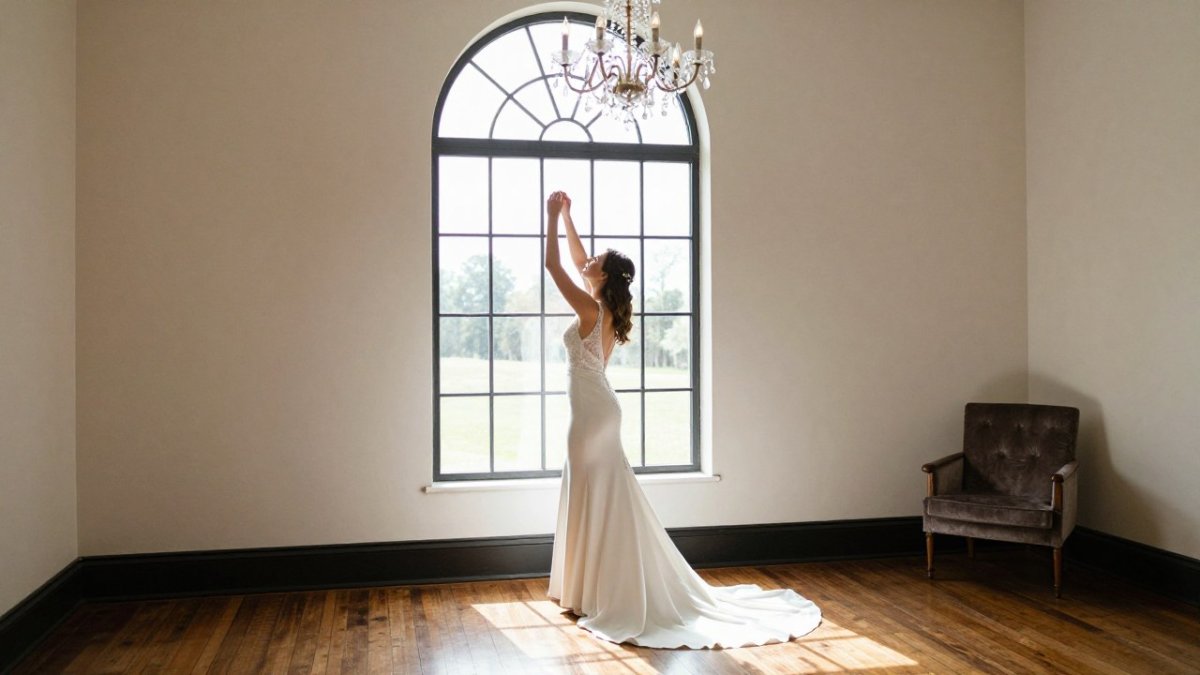
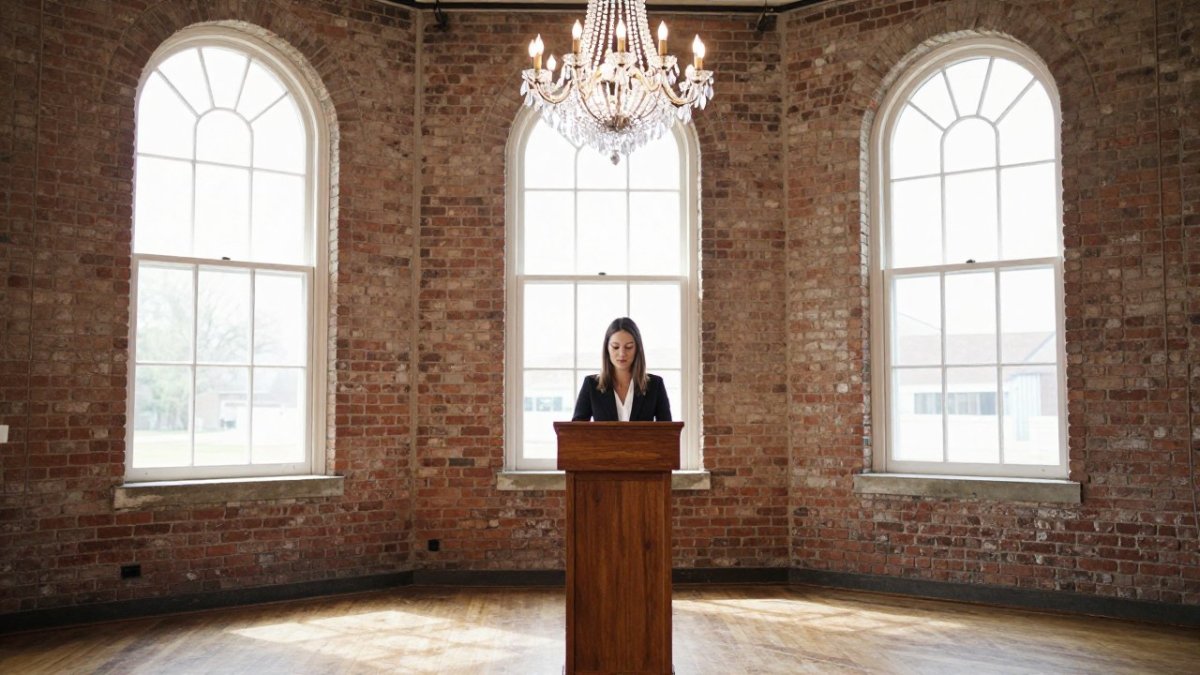
The Lear family restored this historic building and reopened it as an event venue, a project covered by Miami Valley Today's report on the reopening. That history is part of what you are booking. Exposed brick, original tin ceilings, and a rustic speakeasy give the hall a character that newer spaces work hard to imitate.
The hall provides a setting for weddings, corporate gatherings, and celebrations.
We encourage you to reach out if you have a specific Saturday in mind. Availability shifts as dates are held, so the way to know what is open is to ask.
Booking a historic venue asks more upfront: more questions and more written confirmation. The payoff is a room with a story.
You get a restored building originally constructed in 1870, with exposed brick, original tin ceilings, and a rustic speakeasy.
Learn more about 1835 Event Hall.
Frequently Asked Questions
How do I book 1835 Event Hall?
Start by contacting the venue to confirm whether your preferred date is open, then schedule a tour to walk the space with your guest count in mind. After the tour, request a written quote that lists what the rental fee covers and what costs extra. Review the vendor and alcohol policies, then sign the agreement and pay the deposit to hold the date. The venue's social posts note it is booking dates in 2026 and 2027, so start the conversation early for peak Saturdays.
What should I ask before booking a historic event hall?
When evaluating a venue, consider what information you need about its space and policies before making a decision.
How far in advance should I book an event venue?
For a Saturday wedding in spring or fall, start touring venues 12 to 18 months ahead, since popular dates go first. Corporate holiday parties often book 6 to 9 months out because December weekends are limited. Smaller gatherings like showers or milestone birthdays can sometimes be placed 3 to 6 months ahead. Ask directly which dates remain open, and treat any date you love as one that will not stay available long.
How can I check whether a historic venue fits my guest count and event plans?
Consider how your guest count and event plans fit the space.