 How-to
7 Signs of a Good Corporate Event Space to Check
Last Updated: November 15, 2026
Quick Summary
A good corporate event space gives guests easy access and parking, matches capacity to your actual layout, and offers flexible seating with clear guest flow and breakout areas. Confirm controllable lighting, acoustics, tested Wi-Fi and power, and get every inclusion and cost in writing before you book.
- Ask every venue for theater, banquet, and standing reception capacity figures, then match them to your real guest count.
- Test Wi-Fi speed on your phone in the main room and breakout space, and note upload and download numbers.
- Clap once in the main room and breakout space to judge acoustics and sound bleed.
- Ask whether circuits are shared with kitchen or HVAC equipment before plugging in AV gear.
- Get the total cost and rental inclusions in writing rather than accepting a verbal estimate.
Table of Contents
- Why the Right Corporate Event Space Decides Your Event's Success
- Location, Access, and Parking That Guests Actually Appreciate
- Capacity and Room Size: How Much Space Do You Really Need?
- Corporate Event Space Layout: Seating, Flow, and Breakout Areas
- Atmosphere, Lighting, and Acoustics That Set the Tone
- Technology and Corporate Event Venue Amenities to Confirm
- Your Corporate Event Venue Checklist for the Site Visit
- Questions to Ask When Booking an Event Venue
- Frequently Asked Questions
Why the Right Corporate Event Space Decides Your Event's Success
A corporate event space is the physical environment where your company hosts meetings, trainings, celebrations, and client gatherings, and its design quietly shapes how every guest behaves. Choose well and people stay longer, talk more, and remember the day. Choose poorly and the room fights you all night.
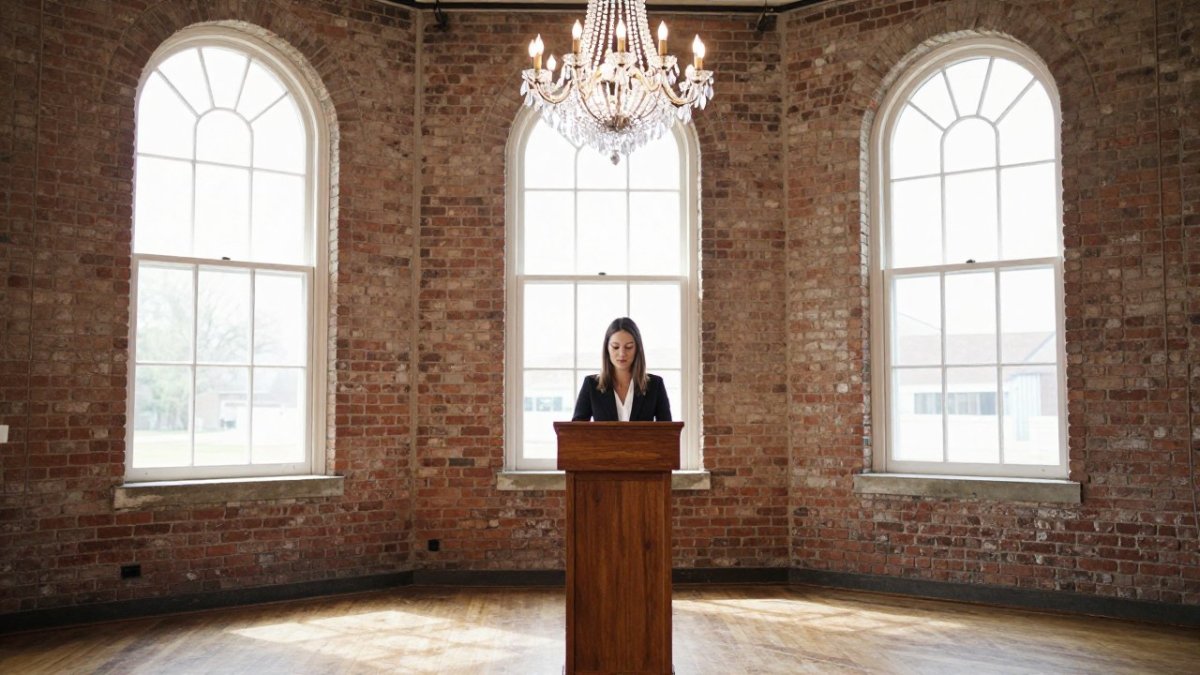
A restored 1870 building with exposed brick and original tin ceilings can do a lot of the work. The room sets the tone before the first speaker says a word.
Below, we'll show you exactly how to read a space before you sign, and the seven signs that separate a venue that carries your event from one that merely holds it. But first, here's what most venue tours get wrong: planners check capacity and parking, then stop looking. The details that sink events are smaller and quieter.
The U.S. General Services Administration's event planning guidance treats venue selection as a risk-management decision, not just a booking. That framing is right. A good space removes friction. A bad one adds it in ways you only notice on the day.
Location, Access, and Parking That Guests Actually Appreciate
Guests forgive a lot, but they do not forgive a hard-to-find venue with nowhere to park. Location and access are the first practical filter, and they matter more for corporate events than most planners admit.
Start with the approach. Can a rideshare driver pull up to the door? Is the entrance obvious from the street? For evening events, is the block well lit?
Then walk the parking math:
- Count spaces within a short walk, not just on-site spots
- Ask whether the venue reserves a block for your group
- Confirm drop-off and pickup flow for guests with mobility needs
- Check nearby transit options for attendees who do not drive
Downtown locations often beat rural ones on convenience, especially when out-of-town colleagues are flying in. For practical venue selection criteria, see our article on what to look for in modern corporate event space rental. A venue in a walkable downtown can give guests dinner options and hotel access without a second drive. For a deeper framework, our guide on how to choose a venue for professional gatherings walks through the trade-offs.
Capacity and Room Size: How Much Space Do You Really Need?
A room that holds 150 people seated theater-style may feel cavernous for a 60-person dinner. Capacity is not one number; it is a set of numbers tied to your layout.
Ask every venue for three figures: theater seating, banquet seating, and standing reception capacity. Then match the number to your actual event, not your hoped-for turnout. A room that fits your guest count with a little breathing room beats a packed hall every time.
Watch out: a historic building's posted capacity may reflect fire code limits, not comfort. A space can legally hold 200 and still feel cramped at 150.
Venue planning guides often use a square-feet-per-person rule of thumb, and the figure shifts with layout. Seated dinners need more room per guest than a standing reception. Ask the venue to show you a floor plan at your specific count.
Corporate Event Space Layout: Seating, Flow, and Breakout Areas
The best layouts let guests move without squeezing past each other. A corporate event space layout should answer three questions before you book: where people sit, how they circulate, and where small groups can break away.

Seating arrangement drives the mood. Theater seating suits presentations. Round tables suit networking and dinner. Classroom style suits training. Ask what the venue provides and what you must rent.
Guest flow is the underrated piece. A bar tucked into a corner creates a bottleneck. A registration table blocking the main door creates a line. Walk the room as a guest would and look for pinch points.
Breakout space matters for full-day events. A flexible layout that shifts from general session to small-group discussion keeps energy up. If the venue has a second room or a distinctive nook, ask how it handles sound bleed into the main hall.
Atmosphere, Lighting, and Acoustics That Set the Tone
Atmosphere is the sum of light, sound, and finish, and it is where historic venues either shine or stumble. Warm lighting and a relaxed aesthetic do more for a professional gathering than any decoration budget.
Acoustics deserve a direct question. Hard surfaces like brick and tin reflect sound, which can make a room feel lively or make a speaker hard to hear. Ask how the venue handles noise from a band, a bar, or a neighboring event.
Lighting should be controllable. Can the room dim for a presentation and brighten for dinner? Are there windows that will glare at 5 p.m.?
For planners weighing character against predictability, our article on hosting corporate events in historic spaces covers how to work with the quirks instead of against them.
Technology and Corporate Event Venue Amenities to Confirm
Technology failures are the fastest way to lose a room, and for corporate events the stakes are higher than a dropped slide deck. Confirm audiovisual equipment, connectivity, and power before you commit, and get the answers in writing.
The corporate event venue amenities list should cover:
- Microphones, speakers, and a projector or screen, plus a backup for each critical item
- Reliable Wi-Fi with enough bandwidth for your guest count, not just the venue's marketing claim
- Outlet and power access at presentation areas, registration, and tables
- A sound system that suits both speeches and music
Most planners stop there. The gap that sinks hybrid and tech-heavy events is connectivity and power, so test it directly. Ask the venue for the actual upload and download speeds in the room you will use, not the lobby.
Power deserves the same scrutiny. Walk the room and count outlets near the stage, the registration desk, and any table where laptops will sit. Ask whether circuits are shared with kitchen or HVAC equipment, because a coffee urn on the same circuit as your AV rack is a preventable disaster.
For hybrid events, ask about camera placement, sightlines to the screen, and whether the room's lighting can be controlled for video without plunging the in-person audience into darkness. Confirm whether the venue provides on-site technical support during the event or only during setup, and get the name and response time in writing.
Food and beverage, coat check, and on-site staff support round out the amenity list. Our guide to modern amenities in historic event halls explains which upgrades to confirm so character never costs you function.
Your Corporate Event Venue Checklist for the Site Visit
A site visit is your one chance to test the room with your own eyes, and a written checklist turns a pleasant tour into a decision-making tool. Bring this list, score each item as you walk, and ask for answers in writing.
Use this corporate event venue checklist during the tour:
- Walk the full guest path from entrance to seat, including the route a guest with mobility needs would take
- Test the sound system with a live microphone, then stand at the back of the room and listen
- Clap once in the main room and in the breakout space to judge acoustics and sound bleed
- Check Wi-Fi speed on your phone in the main room and note the upload and download numbers
- Sit in the chairs for five minutes and judge comfort, then check the seat height at tables
- Identify every power outlet near presentation space and ask which circuits they share
- Confirm restroom count, accessibility, and whether they are on the same level as the event
- Ask for the posted occupancy limit and confirm it matches the layout you plan
- Locate emergency exits and ask how the venue handles evacuation for guests with disabilities
- Ask about setup and breakdown time windows and whether overtime is billed
- Review the contract for service charges, deposits, cancellation terms, and included equipment
The last item matters most. Ask what the rental fee includes and what costs extra, from staffing to cleanup, and get the total cost in writing rather than a verbal estimate. Before you book, read our guide on what to know before booking a historic event hall so nothing in the contract surprises you.
Watch out: a venue that hesitates on occupancy limits, emergency exits, or insurance certificates is telling you something. Ask for the certificate of insurance and confirm the venue carries general liability coverage before you book.
Questions to Ask When Booking an Event Venue
The right questions to ask when booking an event venue separate a confident booking from a hopeful one. Ask them early, and ask for answers in writing.
| Question | Why It Matters | What a Good Answer Sounds Like |
|---|---|---|
| What is the total capacity by layout? | Prevents a cramped room | Clear numbers for each setup |
| What is included in the rental fee? | Avoids surprise charges | Itemized inclusions list |
| How is parking handled? | Affects guest experience | Reserved block or clear guidance |
| Can we adjust the layout on the day? | Protects your plan | Defined flexibility and limits |
| How does the venue handle sound? | Protects speakers and guests | Specific acoustic solutions |
| What is the cancellation policy? | Manages financial risk | Clear terms in the contract |
Ask about accessibility beyond the front door, too. Can a guest in a wheelchair reach the stage, the restrooms, and the bar? Are there steps between areas? A venue that answers these questions easily is usually a venue that has hosted serious events before.
Your event deserves a space that works as hard as your planning does. At 1835 Event Hall, we pair a restored 1870 setting with exposed brick, original tin ceilings, and a rustic speakeasy that gives corporate gatherings real character. Our team helps you map layout, confirm technology, and plan the details that keep guests comfortable. Get started with 1835 Event Hall and host a corporate event your team will actually remember.
Frequently Asked Questions
What should you look for in a corporate event space?
Start with location and access, then confirm capacity, layout flexibility, and technology. Ask about parking, accessibility, acoustics, and what is included in the rental fee. A good corporate event space should let you tour the room, review a floor plan, and get clear answers on setup times, catering rules, and staffing. Bring a checklist so you compare venues on the same criteria.
How much space do you need for a corporate event?
Density needs vary by layout, so ask the venue for its square footage and a scaled floor plan at your guest count. Always ask for the room's square footage and a scaled floor plan so you can test your layout before booking.
What questions should you ask before booking an event venue?
Ask what the rental fee includes, such as tables, chairs, linens, AV equipment, and on-site staff. Confirm setup and breakdown times, catering and alcohol policies, insurance requirements, and cancellation terms. Check whether the venue has a preferred vendor list and whether you can bring your own vendors. Also ask about sound limits, accessibility features, and parking capacity so nothing surprises you on event day.
How important is location when choosing a corporate event space?
Location affects attendance and punctuality. Choose a venue within a reasonable drive for most guests, with clear directions, nearby parking, and rideshare access. For out-of-town attendees, proximity to hotels helps. A central location with easy access reduces stress and makes it more likely people arrive on time and stay for the whole event.